Research
Interfacial mass and heat transfer
The group studies the interfacial mass and heat transfer that underlies environmental separations: the processes that govern how energy, water, and dissolved matter are exchanged between engineered systems and the natural environment. Our work combines bench-scale experiment, multiscale modeling, and data-driven analysis.
Thermal management
Regenerating dielectric coolants for next-generation cooling systems
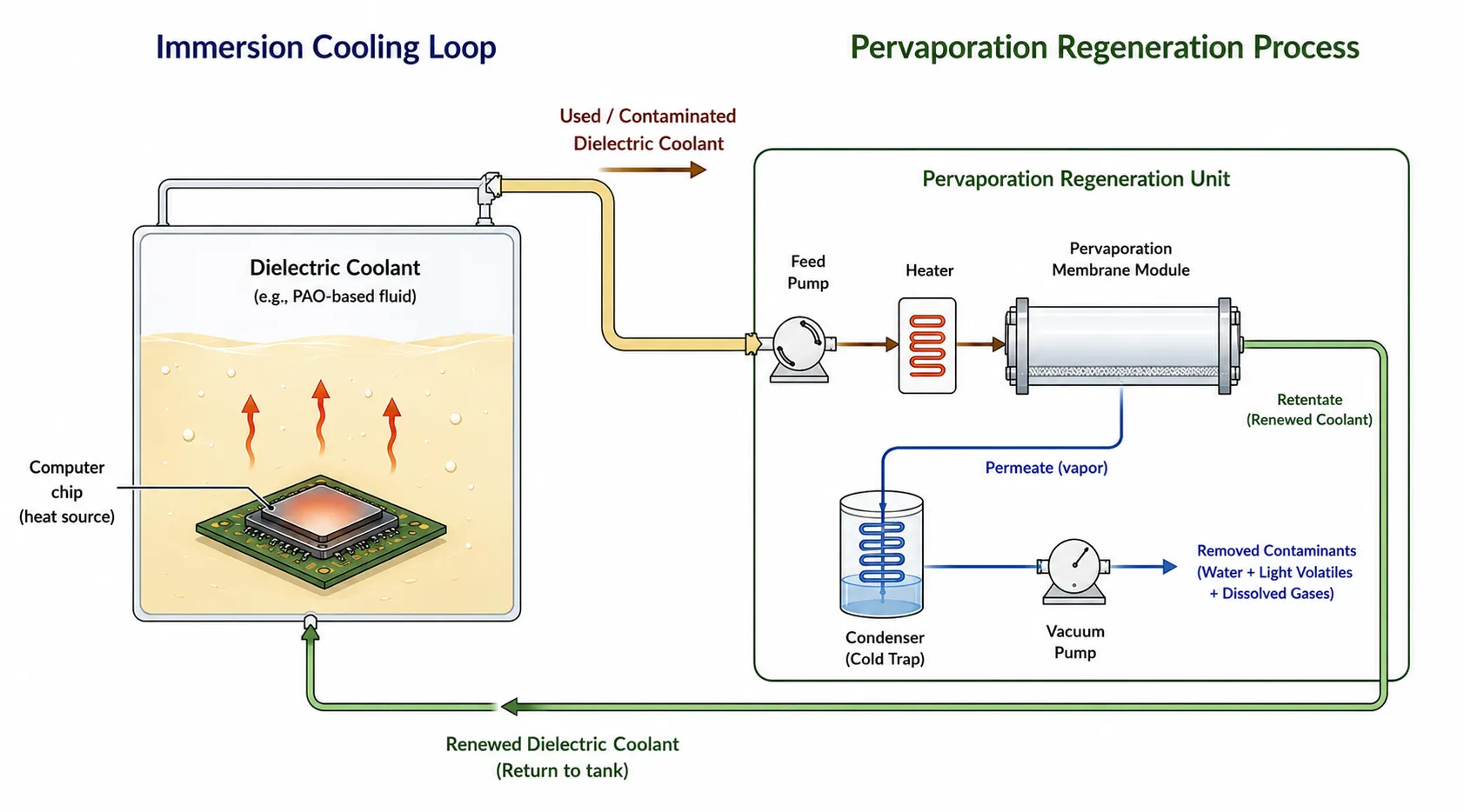
Why coolants have to be regenerated
Immersion cooling fluids take up water and dissolved gases, accumulate particulates and dissolved metals, and generate their own degradation products. They are costly and hard to dispose of responsibly, so the environmental case for immersion cooling rests on reuse rather than replacement.
Contaminant transport in a nonaqueous fluid
These species partition and diffuse very differently in a dielectric fluid than in water. We measure their behavior at separation interfaces to identify what actually limits removal.
Coupled heat and mass transfer
Regeneration happens in a fluid whose purpose is to carry heat, so separation and thermal transport are not independent. We study how temperature gradients and phase change interact with the transport of dissolved species.
Performance over a service life
Whether regeneration is worth doing depends on behavior after many cycles, not one. We track how separation efficiency and coolant properties evolve with repeated use.
Water security and resource recovery
Self-powered capture of metal ions in aquatic environments
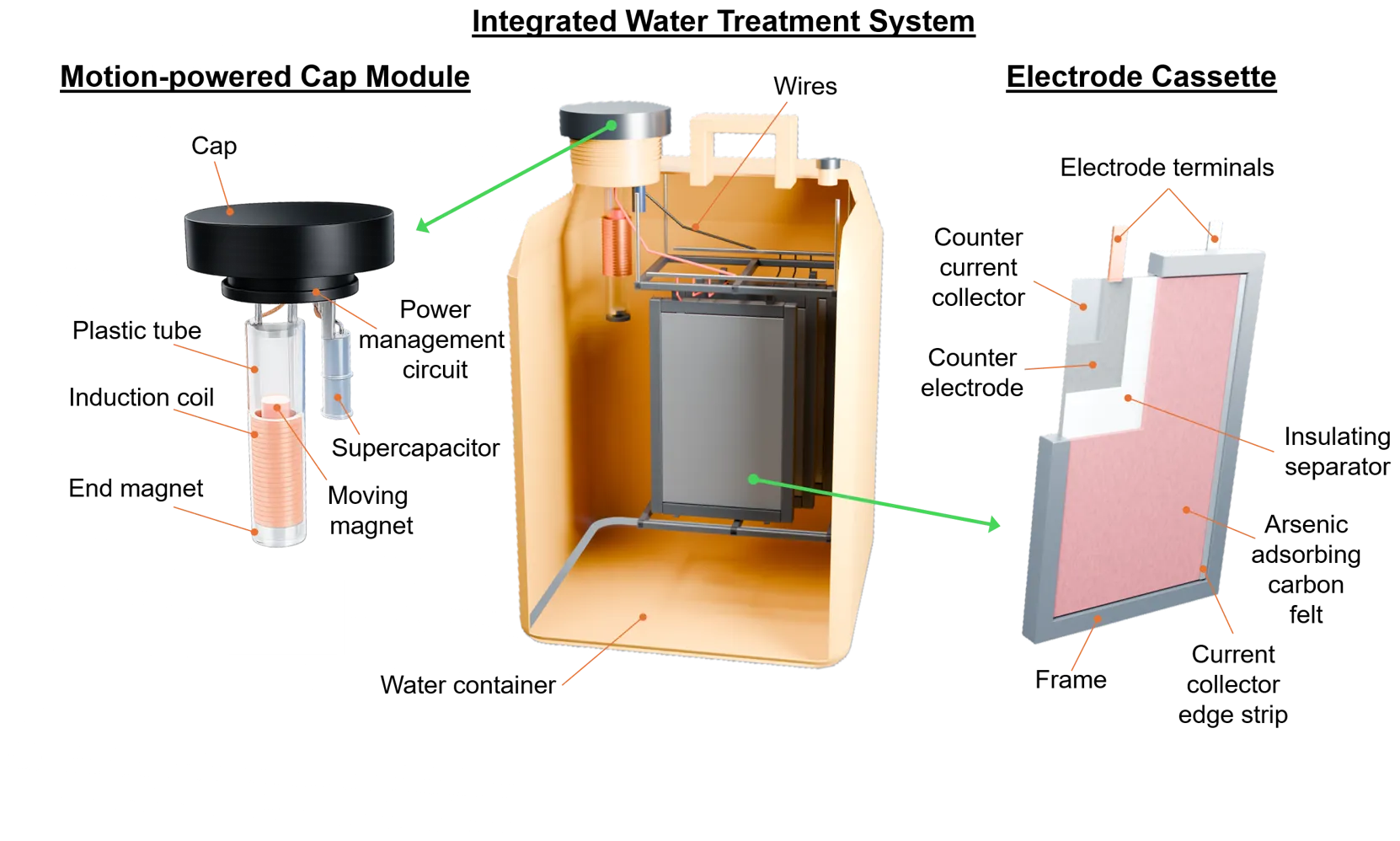
A hazard and a resource at once
The ions that make a water supply unsafe sit alongside metals whose supply chains are strained. Either way the target has to be pulled out of a background of chemically similar ions that are often far more abundant.
What sets ion selectivity
Hydration energy, charge, size, and specific binding compete to determine which ion crosses a membrane or binds a sorbent. We work to resolve which of these controls selectivity for a given target ion.
Capture without an external power supply
The communities that most need selective capture often have the least infrastructure for it. We study how spontaneous chemical potential differences, concentration gradients, and ambient energy can drive capture where a reliable grid cannot be assumed.
Recovery, not only removal
Taking a metal out of water and recovering it in usable form are different problems. We study the release and concentration steps that decide whether a captured metal becomes a product or another waste stream.
Engineering education
Engineering judgment in an era of abundant knowledge
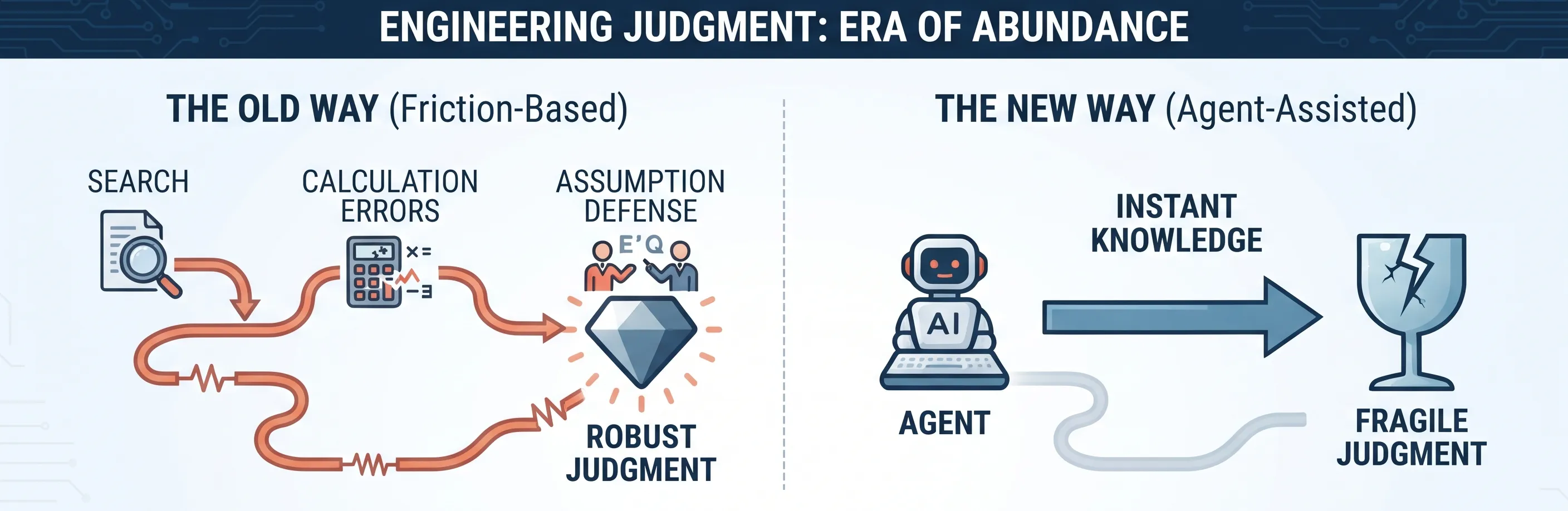
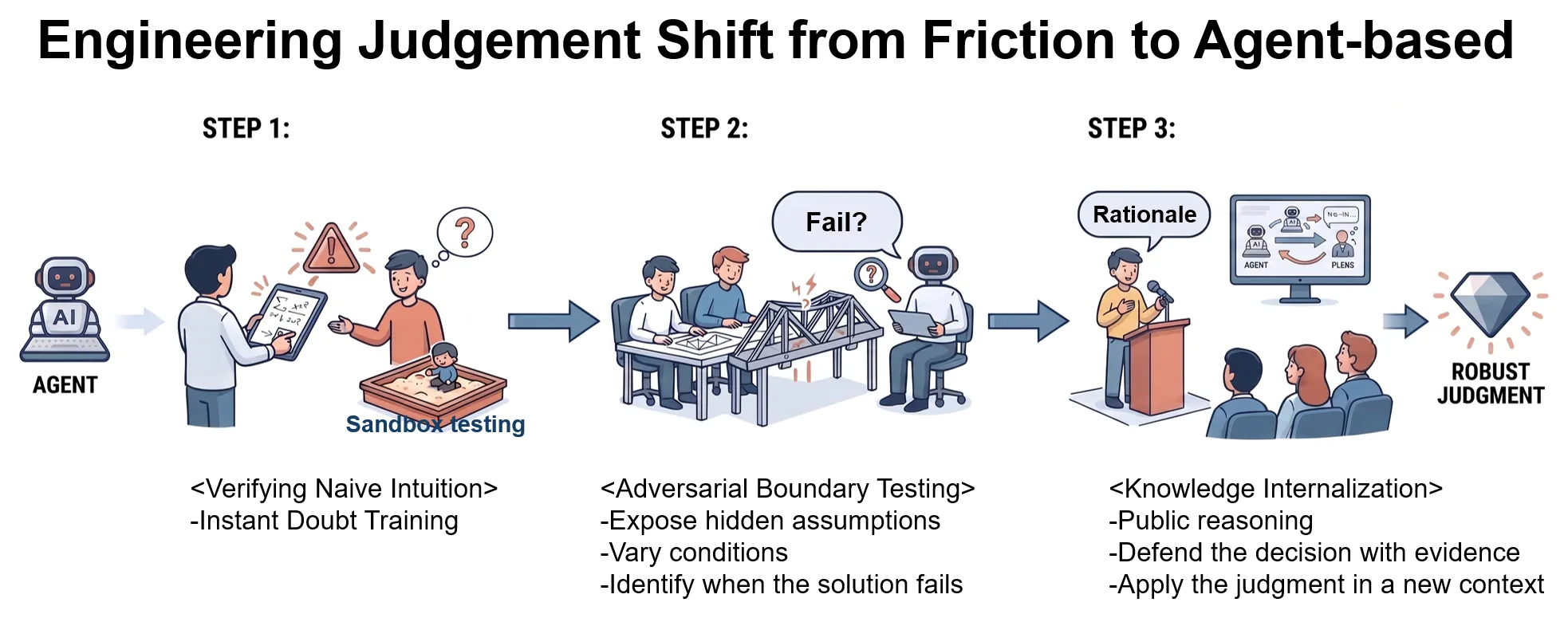
Knowledge is no longer the constraint
A student can retrieve a derivation, a design precedent, or working code faster than they can judge whether any of it applies. What is scarce now is the judgment to tell.
Judgment was built on friction
An agent removes exactly the experiences that used to build it: the search that dead-ends, the estimate wrong by three orders of magnitude, the assumption that has to be defended out loud.
What develops, what atrophies
We want to know which parts of engineering judgment still form when an agent is always at hand, which quietly weaken, and which mature faster because harder problems come within reach sooner.
Designing courses around it
The engineers we train will practice with these tools, not without them. We treat this as an open empirical question in our own courses and lab rather than a settled one.